

As many wealth management frameworks across Europe are changing, many high-net-worth individuals are looking at how to get residency in Monaco. The process is to apply for a residence permit (carte de séjour) with proof of a home, sufficient financial means and a clean criminal record. Tax residence is a separate step: Monaco issues a tax residence certificate to permit holders who spend more than 183 days a year there, run their main business there, or spend most of the year there.
Why consider residency in Monaco?
The global tax landscape is constantly evolving. Recent developments, such as the end of the UK's non-dom regime in April 2025 and the tightening of golden visa programs across Europe, have prompted individuals to reassess their wealth management strategies. Previously popular residency arrangements may no longer be as effective.
Moreover, tax authorities are placing greater focus on HNWIs and their tax affairs. Information-sharing agreements between countries are increasing, and investigations are being launched to scrutinise those with global assets.
To protect your wealth, Monaco remains one of the most favourable jurisdictions for HNWIs. Residency in Monaco is just one piece of a broader wealth management strategy. After you gain residency, you may want to receive a certificate of tax residency as well. Achieving it involves meeting specific residency requirements, including day-counting limits — an area where Daysium can assist.
What are the benefits of residency in Monaco?
Before diving into the process, let's examine the benefits of Monaco's residency. Decisions around residency are complex, involving multiple factors such as lifestyle and family ties. Monaco offers several compelling advantages:
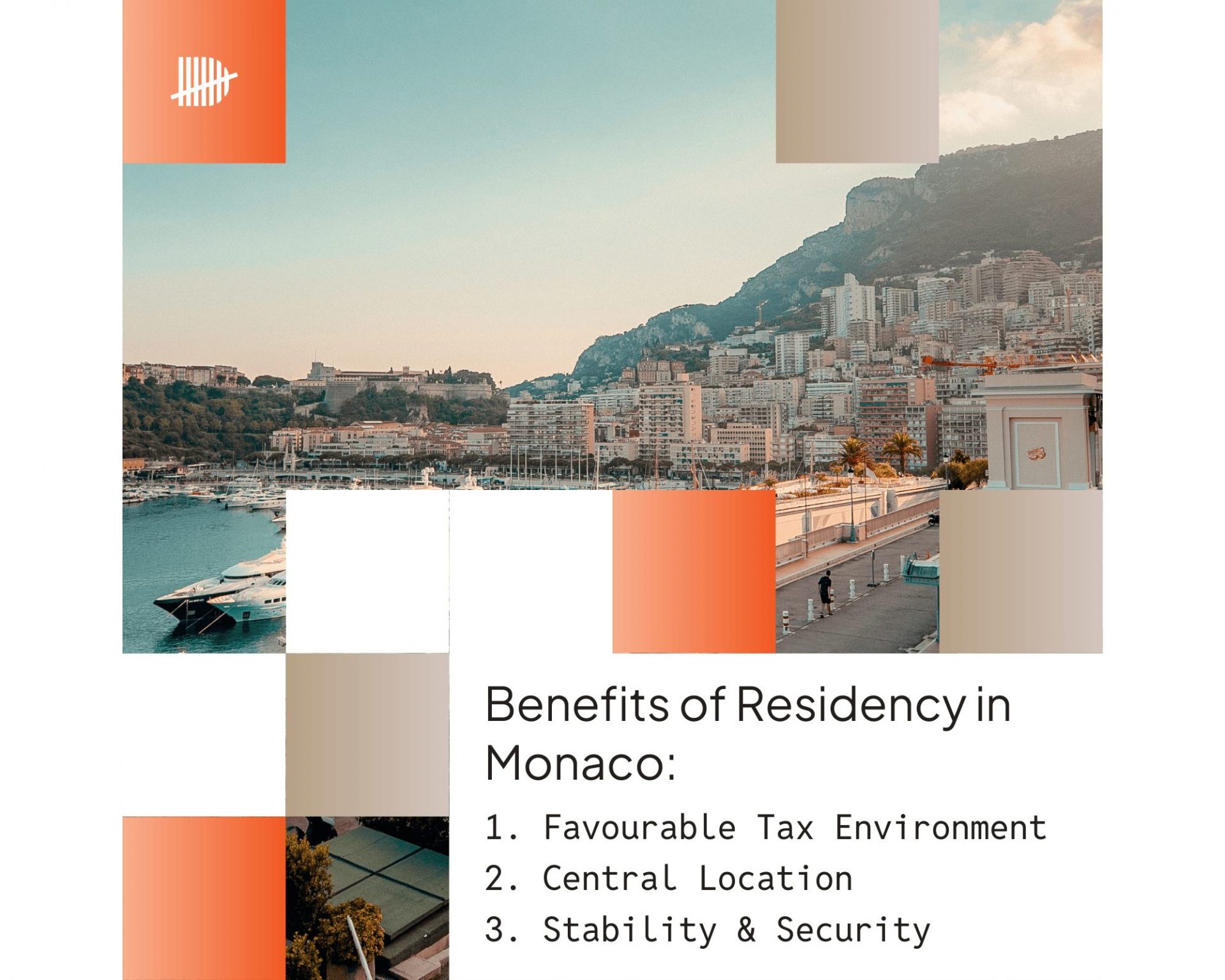
1. Favourable tax environment
Monaco's tax regime can play a significant role in wealth protection. The city-state imposes no personal income or capital gains tax, making it particularly attractive to individuals with substantial investment portfolios. Furthermore, there is no wealth tax, and inheritance tax applies only to local assets. This tax-friendly environment is especially appealing in light of tightening tax regulations in other European countries.
2. Central location
Monaco provides excellent connectivity to major European cities. As a small city-state, it is easy to travel in and out, with many residents frequently visiting nearby France. The closest international airport, Nice Côte d'Azur Airport, is approximately 30 minutes away, making both business and leisure travel convenient.
3. Stability and security
Monaco is highly regarded for its long-standing reputation for political and economic stability. The legislative environment has remained largely consistent, providing a sense of security for residents. Additionally, Monaco offers a high standard of living, world-class amenities, and a vibrant social scene, making it an ideal location for HNWIs.
How do you get residency in Monaco?o
The process of obtaining residency in Monaco is relatively straightforward, although it requires careful attention to residency requirements and proper documentation.
Here's a step-by-step guide:
Step 1: Meet Monaco's residency requirements
If you wish to become a resident in Monaco, you'll need to apply for a residence permit. To receive the permit, you'll need documentation to show:
- You have accommodation (proof of ownership or rental agreement) in the Principality.
- You have sufficient financial resources (bank statements or salary agreements).
- Good character (a copy of criminal records information from the country or last two countries of residence for the five years before arrival in Monaco).
Non-EEA citizens need to apply for a long-term visa for Monaco which they can do via the French authorities.
Step 2: Apply for a Monaco tax residence certificate
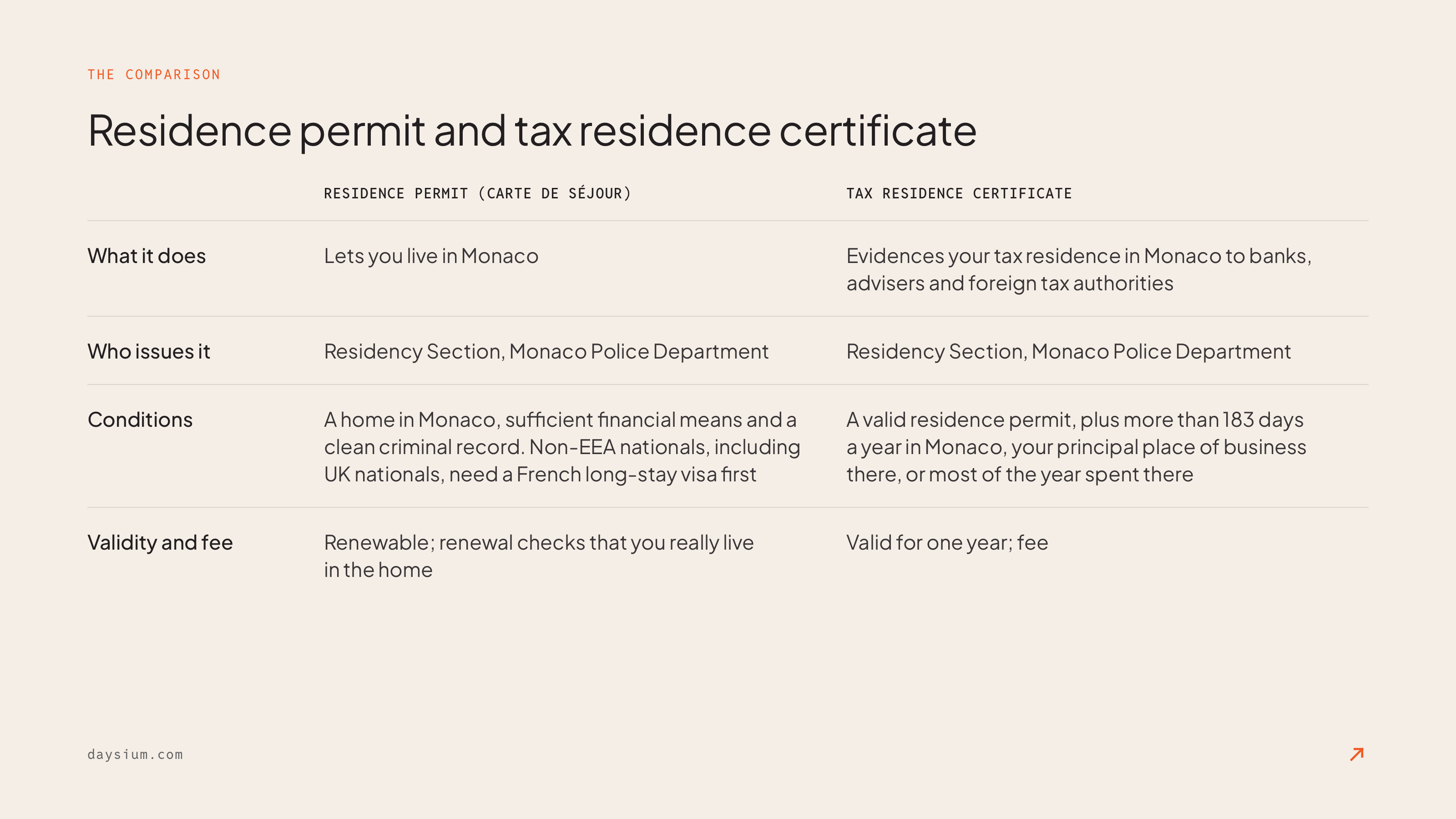
Once you meet the residency requirements, you may want to apply for Monaco's tax residence certificate (certificat à des fins de formalités fiscales). For this you must obtain an administrative residence permit (carte de séjour).
To qualify for a tax residency certificate in Monaco, you must establish a domicile or "foyer" in the city-state. You can achieve this by meeting one of the following conditions:
- Spend 183 days or more in Monaco or
- Demonstrate that your centre of economic interest is in Monaco.
For many, maintaining physical presence for at least 183 days is the simplest route. However, if you plan to spend less time in Monaco, you'll need to strengthen your economic ties by investing in local banks, purchasing real estate, establishing a family office, or starting a service-providing business.
An Exception: French Citizens in Monaco
French nationals face unique circumstances due to a bilateral agreement between France and Monaco. Even if they reside in Monaco, French citizens remain subject to French income tax. It's important to seek specialised advice if you are a French national considering residency in Monaco.
Step 3: Keep accurate day counting records
Throughout the process of obtaining residence, data about your location can help smoothen the process. Meeting the 183-day requirement is only one part of the process, as you must be prepared to document your presence accurately. Authorities in Monaco — or in other tax jurisdictions you frequently visit — may scrutinise your actual presence.
Maintaining precise day counts can help establish your primary residence and prevent accidental overstays. Using technology to automate and document your travel days makes that record far easier to keep. Our guide to moving to Monaco and why day counting records matter explains what Monaco and the UK each look for.
Common challenges in obtaining residency
The path to obtaining residency in Monaco may vary depending on individual circumstances. Common challenges include:
- Finding Suitable Accommodation: Monaco's property market is highly competitive. Securing a residence that meets your needs may take time.
- Navigating Complex Documentation: The process requires various documents to prove residency and financial sufficiency. Working with a tax advisor experienced in Monaco's regulations can ease this burden.
- Maintaining Accurate Day Counting Records: Ensuring you meet the day count threshold is essential. Automating evidence collection can reduce errors and improve accuracy.
At the heart of these challenges lies the importance of proactive planning. Technology can serve as a valuable ally in this process, simplifying record-keeping and strengthening your evidence.
Why does day counting matter for Monaco residency?
Day counting plays a crucial role in residency compliance, especially given today's heightened scrutiny of globally mobile individuals. Exceeding day count limits could trigger tax liabilities while failing to meet the threshold could jeopardise your residency status.
Beyond preventing overstays, accurate day counting can help you confidently prove your residency in Monaco. This is where Daysium comes in.
Our platform offers:
- Real-time day counts in the palm of your hand, following rules from tax jurisdictions that matter to you
- Automated logging of your location based on location data, building your record as you travel
- A system to attach supporting documents as evidence to your day counts, such as geotagged photos and notes
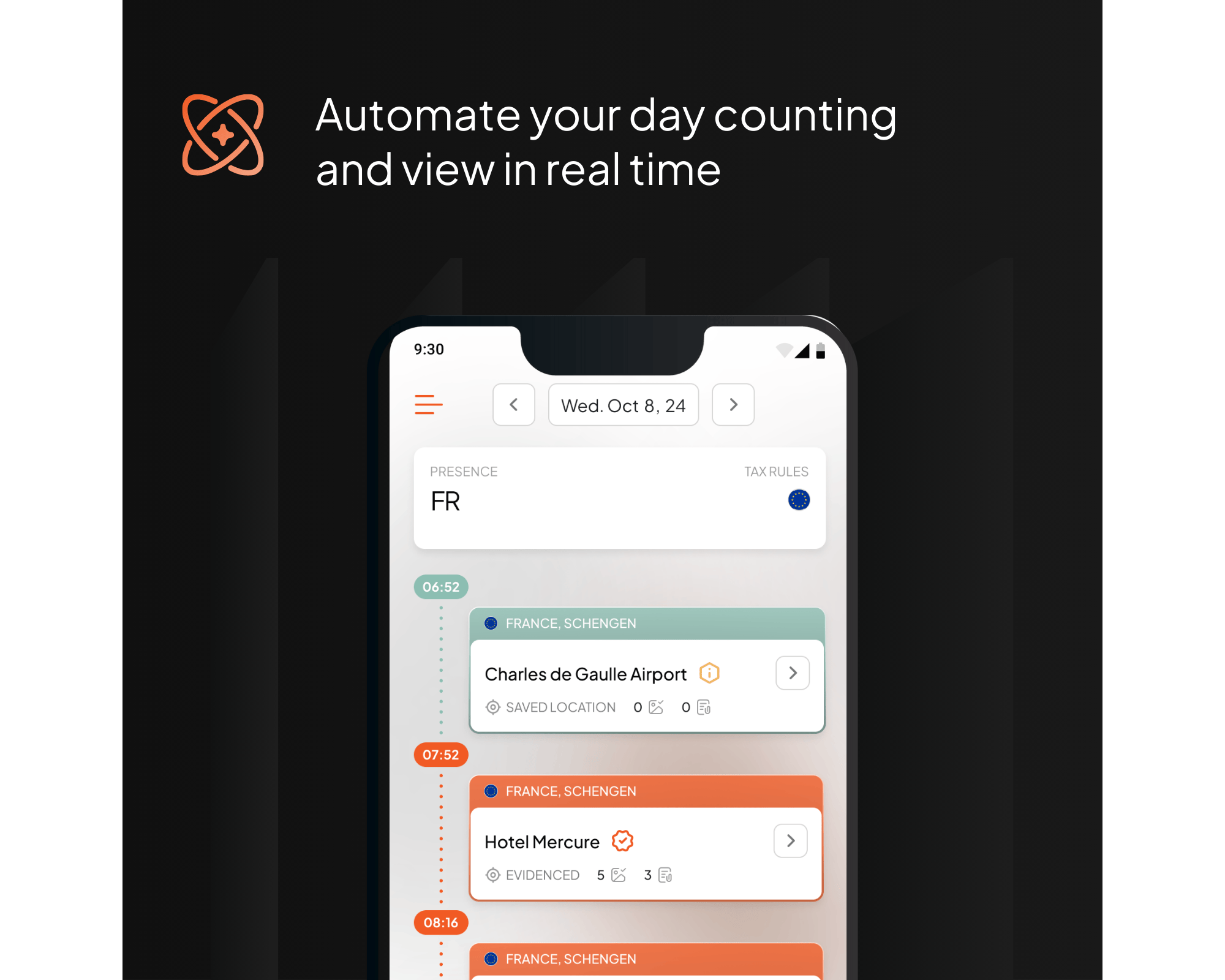
So you can confidently prove your presence in Monaco — or elsewhere — if the authorities ask questions. We like to call it the confidence to state, "There's nothing to see here, everything is in order".
FAQ: How to get residency in Monaco
How do I get residency in Monaco?
Apply for a residence permit (carte de séjour) to the Residency Section of the Monaco Police Department. You need proof of a home in Monaco, sufficient financial means and a clean criminal record. Non-EEA nationals, including UK nationals, must first get a long-stay visa from the French consulate.
What is the difference between a Monaco residence permit and a tax residence certificate?
The residence permit lets you live in Monaco. The tax residence certificate is a separate document that evidences your tax residence to banks, advisers and foreign tax authorities. You need a valid permit before you can apply for the certificate.
How many days do you need to spend in Monaco to get a tax residence certificate?
More than 183 days a year is the most common route. You can also qualify if your principal place of business is in Monaco, or if you spend most of the year there. The certificate is valid for one year.
Do UK citizens need a visa to live in Monaco?
Yes. Since Brexit, UK nationals are non-EEA nationals. They need a long-stay visa from the French consulate in their country of residence before applying for a Monaco residence permit.
Does Monaco residency end my tax residence in another country?
Not automatically. Each country applies its own rules. In the UK, for example, residence is decided each tax year under the Statutory Residence Test, whatever Monaco card you hold. Keeping an accurate record of your days helps you evidence where you were.
Conclusion: The path to residency in Monaco
Gaining residency in Monaco offers a strategic advantage for wealth protection and lifestyle enhancement. However, it's crucial to navigate the process with precision—particularly regarding day counting and compliance. With increased global tax oversight and information-sharing initiatives, proper documentation is your strongest safeguard.
To ensure you're prepared for any potential tax inquiries, take our Tax Residency Risk Score Assessment to identify potential gaps in your record. Whether you aim to meet the 183-day requirement or establish strong economic ties, Daysium provides the tools to help you evidence your tax residency confidently.
Ready to secure your future? Begin by evaluating your risk today.