


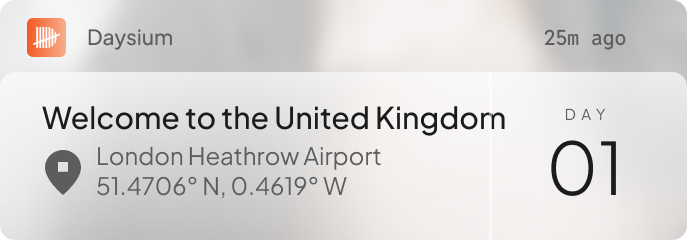

1
Identify whose residence matters
Determine which settlors, beneficiaries, directors or other individuals have residence facts relevant to the structure, transaction or decision.

Daysium gives the people behind your structures one process for counting and evidencing residence, with permissioned access for the professionals who need it.


Residence is a question of fact. Statements, spreadsheets and recollection become much harder to rely on when a position is challenged years later.

One inconsistent record is manageable. Across hundreds of structures and relationships, different spreadsheets, advisors and evidence standards become an operating problem.

Where an individual’s residence matters to a structure or decision, the underlying days, movements and supporting evidence are created by that individual — outside the TCSP’s systems.

The UK’s move from domicile to long-term residence has changed what trustees need to know about the people behind a structure.
From 6 April 2025, long-term UK residence became the connecting factor for significant Inheritance Tax scope questions. The treatment of foreign settled assets can now change with the settlor’s status.
Source: HMRC Trusts and Estates Newsletter / IHT guidance
HMRC specifically says trustees — including trustees outside the UK — need to review the settlor’s long-term UK residence status.
Source: HMRC Trusts and Estates Newsletter, April 2025
In Jersey, firms exercising discretion must take reasonable steps to obtain sufficient information, evidence decisions in writing, and keep adequate, orderly and up-to-date records.
Source: JFSC Trust Company Business Code of Practice
Identify. Record. Review.
1
Determine which settlors, beneficiaries, directors or other individuals have residence facts relevant to the structure, transaction or decision.
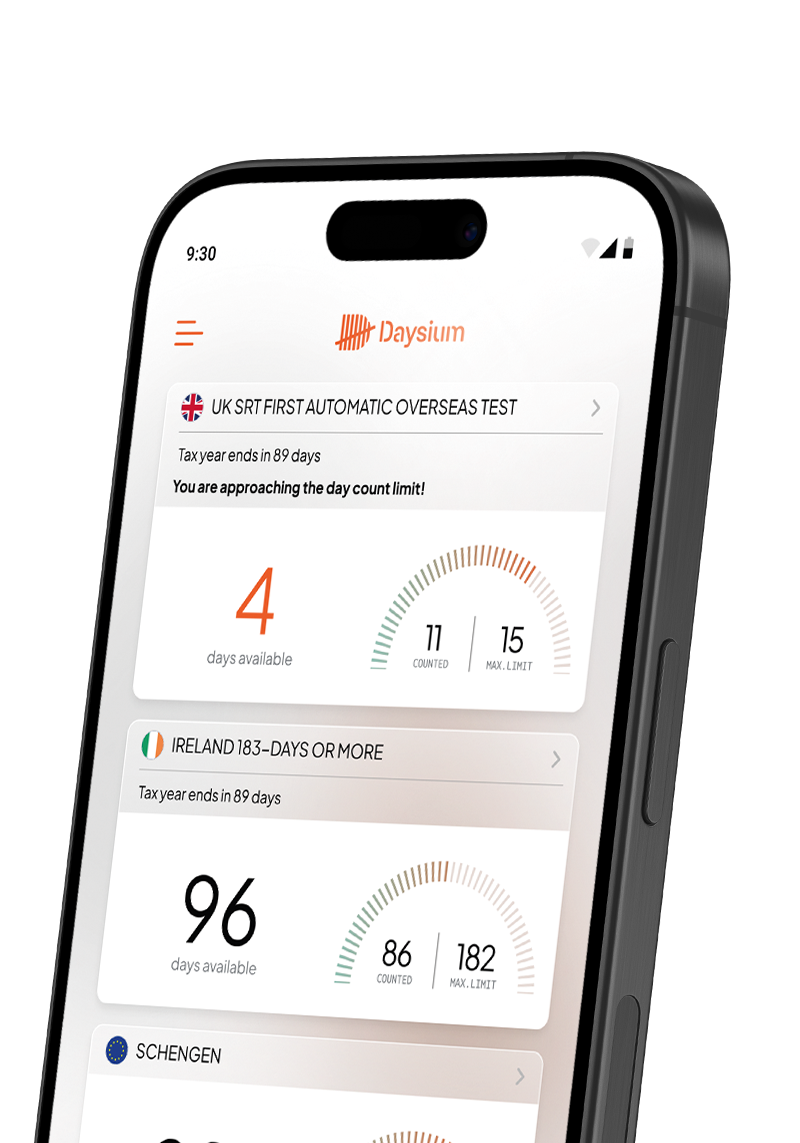
2
Daysium Mobile keeps the person’s day counts current against the rules set for their position, while the record builds as they travel.

3
The individual can invite specific trustees, tax advisors or other professionals into Daysium Portal. A report can be retained with the file when advice or a fiduciary decision is made.
Daysium does not decide the tax or fiduciary treatment.
Professional judgement stays with the firm and its advisors.
Introduce a better process where the need is clearest. Then build from there.

Introduce Daysium when a new relationship is established and personal residence is relevant.
Start with existing relationships where changing residence, scattered records or repeated evidence requests already create friction.
The individual builds the record in Daysium Mobile rather than reconstructing it for the firm later.

Work from the current position and retain a report alongside the advice, minutes or decision record where appropriate.
As adoption develops, work with Daysium on the structures, roles and permissions needed to extend the process across the organisation.
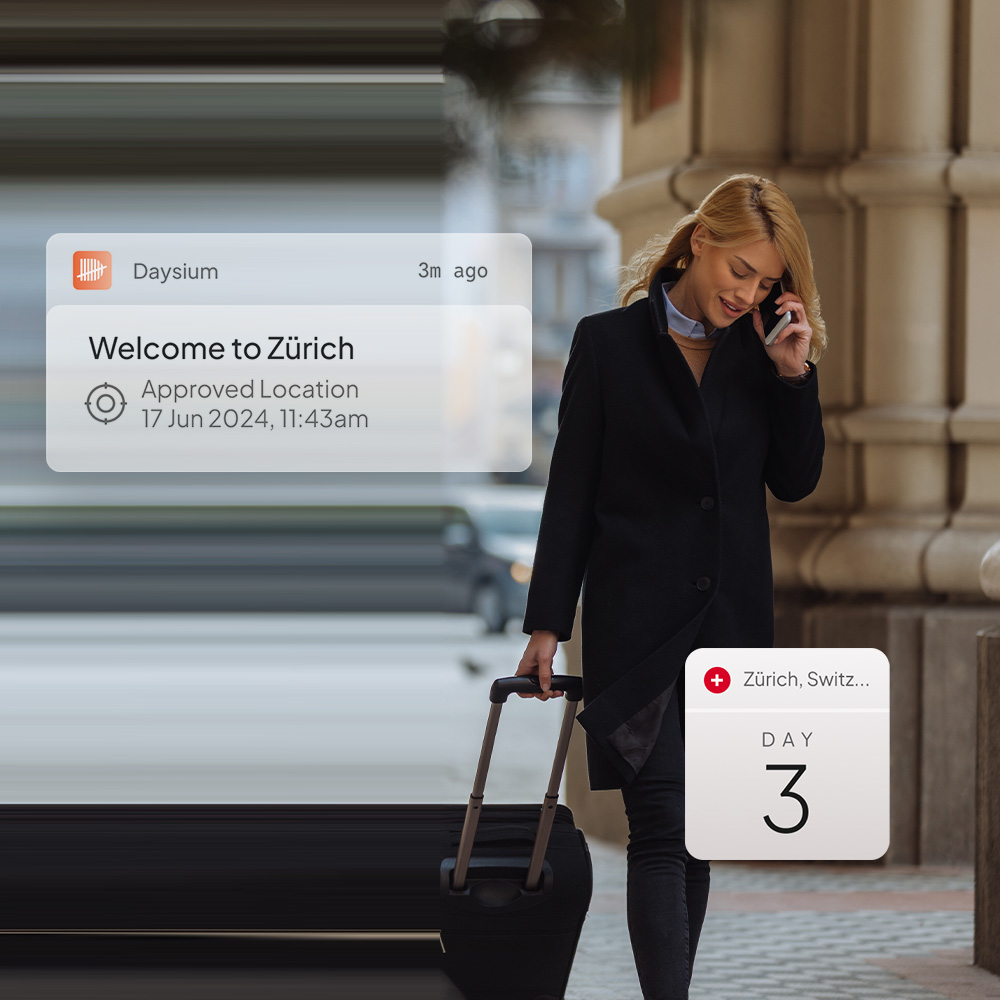

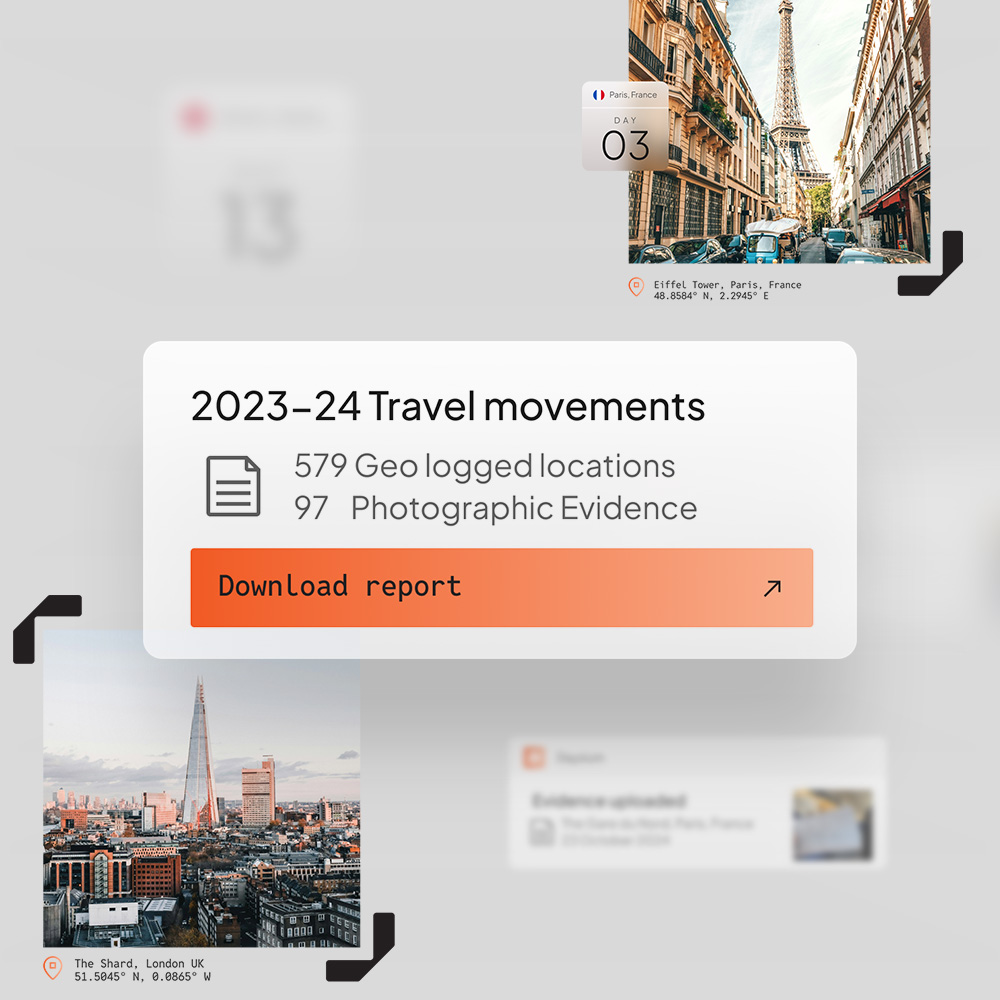
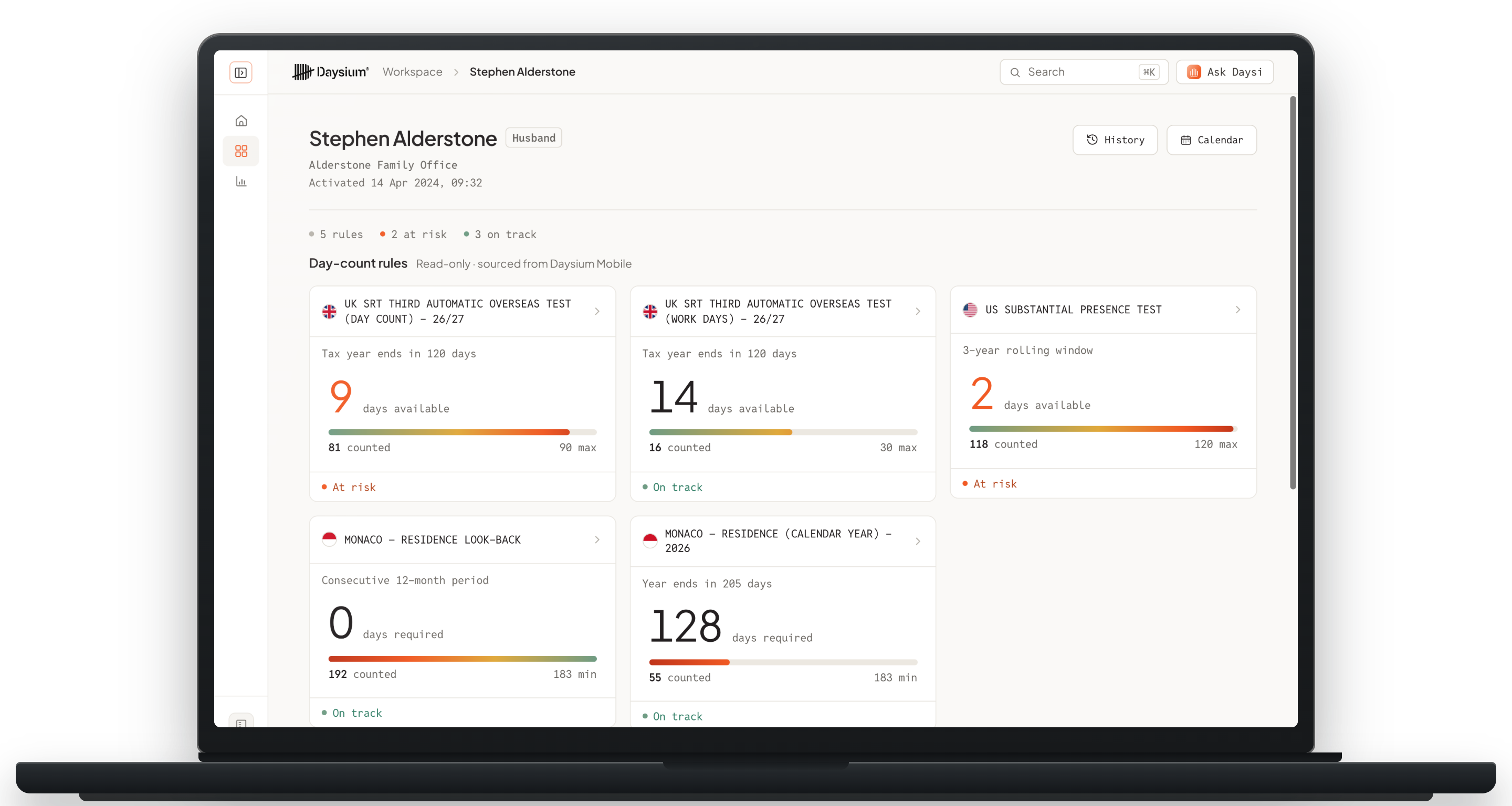
The individual carries Daysium Mobile. It keeps their day counts current against the rules set for their position and builds the factual record as they travel.
Location-derived records, assumptions, corrections and supporting evidence build through the year, with provenance preserved in the audit trail.
Generate a point-in-time report when the current position needs to be retained for advice, administration or the file.
Named professionals can be given permissioned access to the individual’s live day-count position and reports. Access belongs to the named person, not automatically to their firm.
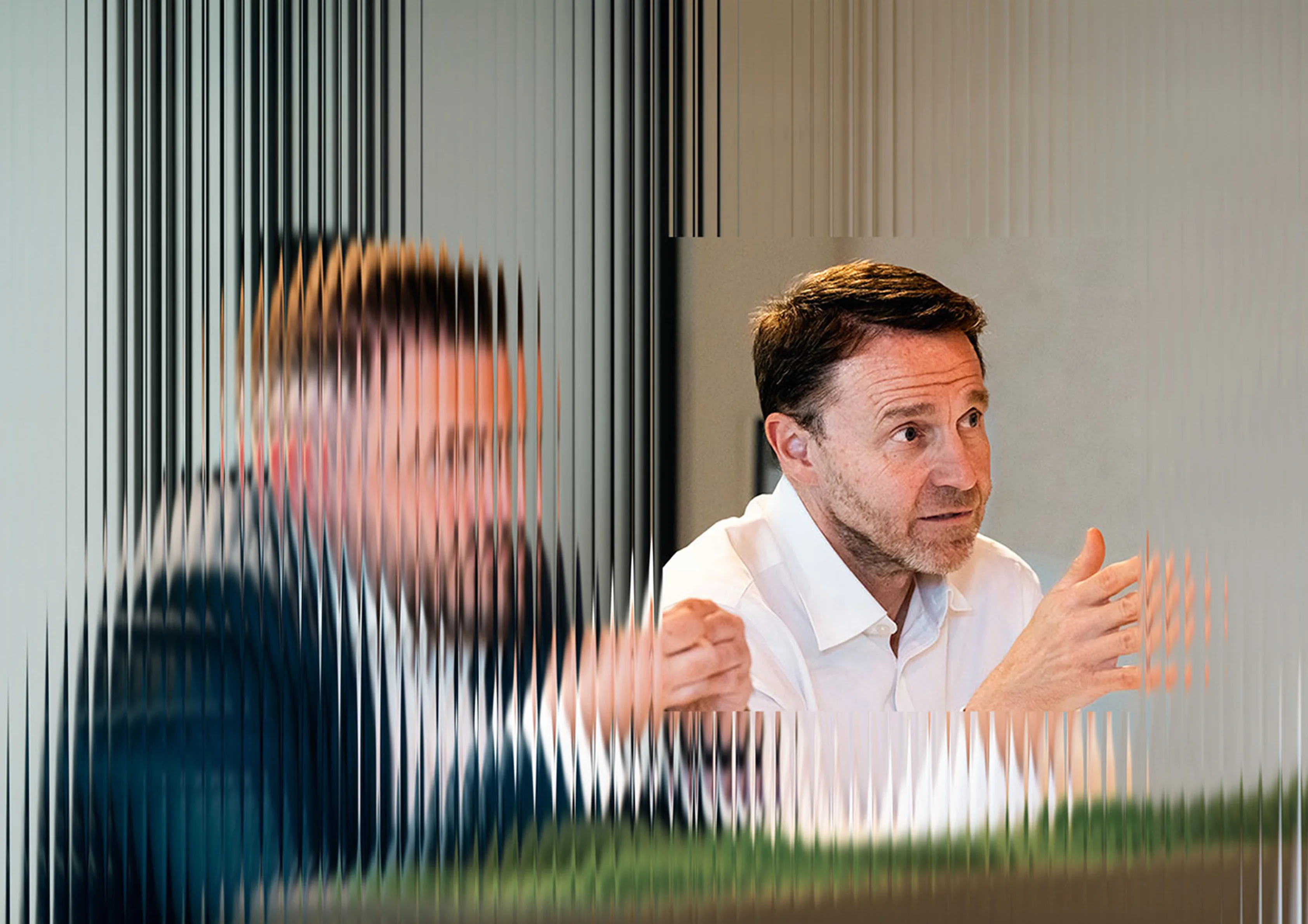

Daysium’s approach to building the factual record behind personal residence has been developed with Founding Partner Trident Tax, including the co-written article Modernising Trust Compliance: What Audit-Ready Residency Evidence Looks Like.
“HMRC don’t just want you to track your days, they want you to evidence them. However, by incorporating the day-count evidence into your day to day movements an individual can systematically produce an ‘enquiry-ready’ file of evidence that can be provided to trustees (and if needed to HMRC) to provide a clear confirmation of residence year by year for settlors and beneficiaries.”
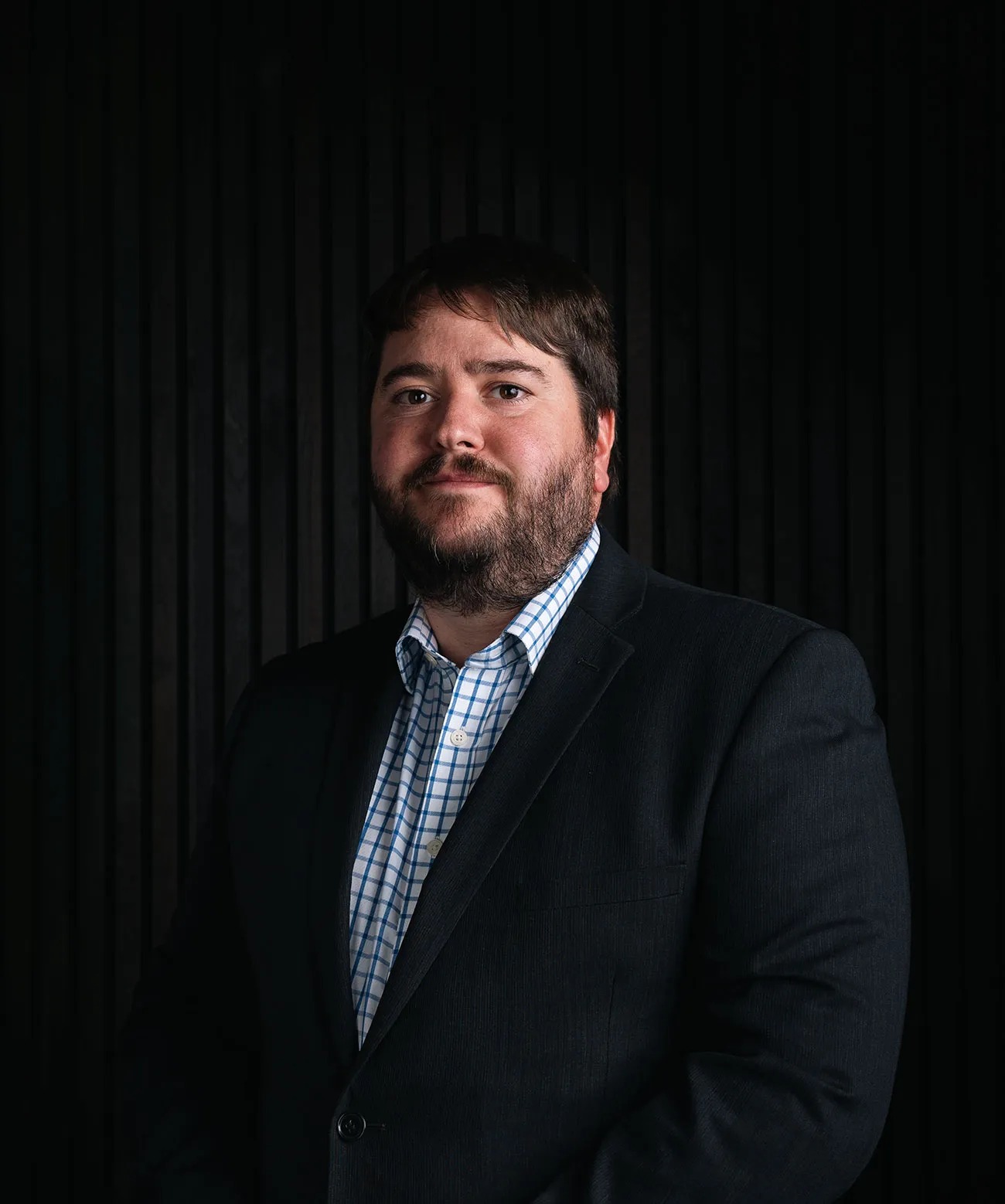 Edward Ullathorne,











Daysium already gives individuals a structured factual record and the professionals they choose permissioned access.
For TCSPs, that provides a practical starting point today — with the model able to extend across structures, roles and permissions over time.
We’re working with firms to shape that next layer around how they actually operate.
No. Daysium provides the day counts, record and evidence. The tax treatment, fiduciary judgement and decisions remain with the firm and its professional advisors.
No. Access is granted by the individual to named people. Paying for, administering or working for the organisation does not automatically confer access to somebody’s Daysium data.
Daysium cannot compel somebody to participate. The firm must decide what alternative information or evidence is sufficient for the circumstances. Offering a consistent process can support the firm’s governance record, but it does not by itself discharge a fiduciary obligation.
That depends on the governing terms, the circumstances and the firm’s professional judgement. Where the cost can properly be treated as an administration expense, the structure may meet it rather than the individual paying personally.
Yes. New business and existing relationships where the need is already clear are natural starting points. The process can expand as it proves itself.
Current access begins with the individual and the named professionals they invite. The enterprise work for TCSPs is extending that model across structures, roles, permissions and organisational oversight.

Finalist two years running at theDigital Jersey TechAwards2024 – Startup Category2025 – Fintech, Startup

#2 Most Recommended StartupOut of 3,000+ companies, Daysium was ranked 2ndin a live, AI-powered scoring of Europe’s topstartups by global VCs & investors
In essence
The relevant people build the record, the right professionals can work from it, and the process becomes consistent across the book.