The New Architecture of Private Client Services

As the global UHNW population grows and client lives become genuinely multi-jurisdictional, the gap between front-office excellence and compliance infrastructure is widening. This article examines what the most effective private client services firms are doing differently, and why the evidence layer is now where relationships are won and lost.
A slightly distorted imaged of London skyline with Daysium's Citywealth Magic Circle Awards shortlist logo in the left corner.

For most of the past century, private client services were built around a simple assumption: that the client was, broadly speaking, in one place. They had a primary residence, a primary tax jurisdiction, and a primary adviser who understood both. The job was to manage wealth well within that context.

If you divide your time between jurisdictions, hold assets across borders, or manage a family structure that spans multiple tax systems, you will have noticed the distance between that assumption and your reality.

Take the area of day counting and record-keeping for tax compliance. For most advisers, the infrastructure built to serve private clients hasn’t kept pace. And while the best services are catching up, the gap remains significant. 

What does global wealth look like?

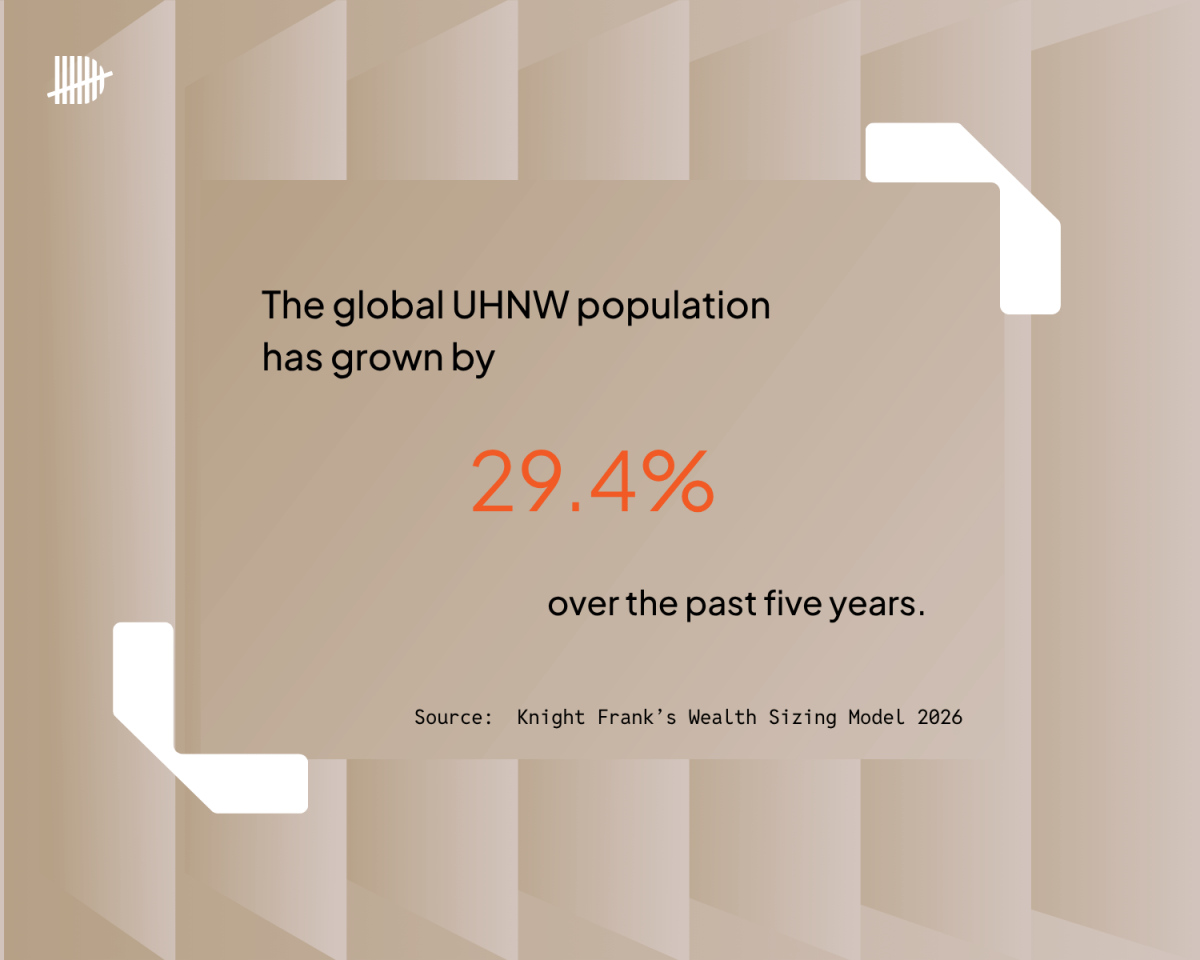
A statistic showing that global UHNWI population has grown by 29.4% in five years.

The global UHNW population has grown by 29.4% over the past five years, according to Knight Frank. There are now more than 713,626 individuals worldwide with net assets exceeding $30 million. And according to research by deVere Group, over a third of its 80,000-strong client base is considering relocation to another country for wealth management. 

These aren’t abstract figures. And within them is a generation of clients whose lives are genuinely multi-jurisdictional: multiple residences, assets held across borders, family members in different tax systems, and professional lives that don’t respect national boundaries.

This all has increased the complexity of the architecture required to manage wealth.  

Cross-border asset holdings, multi-jurisdictional tax strategies, estate planning that spans multiple legal systems, and residency positions that need to be evidenced rather than merely asserted. This is now the baseline, not the exception.

Yet, many private client services continue to operate as they did in the past. They provide an advisory model that serves the clients when the compliance needs aren’t complex. But that’s no longer the case.

From transactional to structural: what clients now expect

The most significant shift in private client services over the past decade has been philosophical.

Families are no longer looking for a collection of specialists who each manage a discrete part of the picture. They want integrated ecosystems. This means advisers who can speak to wealth strategy, tax position, succession, philanthropy, and the management of life events, all within a coherent framework.

This has practical consequences for how advisory firms are structured and what they need to deliver. The appetite is real. Consider, for example, how 64% of HNWIs report being concerned by the lack of personalised advice tailored to their situation, according to Capgemini’s World Wealth Report. 

Yet the response from most firms has been to add specialists rather than integrate them. Coordinating tax, legal, and residency planning used to happen sequentially. A client would engage an adviser, then a lawyer, then a tax specialist, each working from their own version of the client’s position. That model is too slow and too fragmented for the clients it’s meant to serve. 

The advisers gaining ground are those who treat these disciplines as parallel rather than sequential, and who build the client’s evidence infrastructure as part of the relationship.

The direction of travel is clear. Clients in this segment are institutionalising their family offices: integrating private credit, real estate platforms, and tax-driven structures within consolidated ecosystems, with governance that mirrors mid-market private equity. The advisory firms that will retain and grow these relationships are those that can operate within that framework rather than alongside it.

The technology gap that nobody talks about

Here is the less comfortable observation: the wealth management industry has invested heavily in the front-office experience over the past decade, and comparatively little in the compliance infrastructure underneath it.

The numbers are revealing: 

Up to 70% of IT budgets in financial institutions are still spent maintaining legacy infrastructure, leaving limited headroom for genuine innovation in the areas that matter most to clients. 

One in three HNWIs reports dissatisfaction with their primary wealth firm’s digital services. 

And according to a 2024 Avaloq survey, 29% of wealth executives say onboarding an ultra-wealthy client takes three months or longer, reflecting both the complexity and the absence of tools capable of handling it efficiently.

These are symptoms of a broader structural problem. The industry invested in the visible layer and excelled in the client-facing experience. But the underlying compliance and evidence infrastructure around tax residency remained largely unchanged. 

An example from the field of day counting compliance

Day counting for tax residency compliance offers an excellent example of this technology-compliance gap. Clients receive excellent tax advice with clear strategies to manage private wealth. They are explained the compliance rules but too often left for their own devices when it comes to managing it. 

But when a client needs to demonstrate their tax residency position to a tax authority, or an adviser needs to reconstruct where a client was on a specific date eighteen months ago, the tools available are often no more advanced than a shared spreadsheet and a collection of travel receipts.

For a previous generation of private clients, that was acceptable. Their lives were simpler, their residency positions were rarely contested, and the documentation bar was lower.

None of those conditions still apply.

Why the evidence layer now matters

Tax residency planning has evolved from a compliance exercise into a core strategic decision made by clients and advisers together, and one that regulators increasingly scrutinise closely.

A tax residency position is only as strong as the evidence that supports it.

When a position is challenged by HMRC or a foreign tax authority, the conversation quickly moves from headline numbers to specific dates. 

Not “how many days did you spend in the UK?” but “where were you on the 14th of March, and what can you show me?” A well-maintained day count provides the framework. Evidence is what makes it defensible.

Most globally mobile clients are not building this evidence contemporaneously. They’re reconstructing it retrospectively, often under time pressure, from imperfect sources. That is the wrong moment to discover the gaps.

The advisers building the strongest client relationships in this segment are those who treat the evidence infrastructure as part of their service offering. They help clients document their position in real time, not in response to a challenge. Regulatory scrutiny has made this a strategic priority, not an administrative nicety.

This is the specific gap that platforms like Daysium were built to address, and the reason Daysium has been shortlisted for UHNW Private Client Services of the Year at the Citywealth Magic Circle Awards 2026.

What excellent private client services look like

The private client firms that will define the standard over the next decade share a few characteristics that are worth naming plainly.

They treat compliance as a service, not an overhead. A client who can demonstrate their position clearly and quickly  to a regulator, a lawyer, or a new adviser  is a client who feels genuinely looked after. That sense of security is part of what they are paying for.

They integrate rather than coordinate. Tax, legal, immigration, and financial planning run in parallel, not in sequence. The client isn’t managing the handoffs between their advisers. Their advisers are.

They build evidence, not just advice. The strongest client relationships in this segment are those where records are created contemporaneously, and  not reconstructed under pressure. The evidence exists because it was built into the relationship from the start.

They think in longer timelines. A client considering a change to their residency position, or who has recently made one, needs to understand the implications that run three, five, and ten years forward. The adviser who maps that journey, and builds the infrastructure to support it, earns the long-term relationship.

They understand that the client’s life is the brief. Family structure, succession, philanthropy, cross-border assets, the next generation are all moving parts that require attention. The best private client firms hold all of this within a single coherent framework, rather than treating each element as a separate engagement.

The question for any firm offering private client services is whether they are already that adviser, or whether their clients are quietly finding one who is.

If you’d like to understand how Daysium can support your tax residency compliance, we’d be delighted to talk. Book a call.


Discover how to be tax compliant with Daysium

Created in partnership with industry experts, tackle the complex challenges of day counting and tax record-keeping.