Golden visas in 2026: What’s Changing?

European programmes are tightening or closing, non-EU hubs like the UAE and Saudi Arabia are rising, and tax authorities are paying closer attention to how and where globally mobile individuals spend their time. For HNWIs, success now depends on strategic planning, accurate day counting, and defensible residency records, not just qualifying investment.

Golden visas have long offered strategic wealth management planning to high-net-worth individuals (HNWIs). But the last few years have been transformative for many of these regimes. In 2026, these residency-by-investment programs are shaped by stricter rules, increasing non-EU options and rising global scrutiny. For anyone considering relocating, the time to prepare and get your tax residency records ready is now.  

Golden visas in 2026:

  • Remain popular, but fewer programs are “easy” and most now require more substantial or more targeted investment.
  • Are defined by higher investment thresholds, transparency-driven reforms, and a shift from real estate to other investments, such as business.
  • Are offered in more non-EU hubs such as the UAE.
  • Require understanding of tax residency rules and maintaining strong evidence of where you spend your time.

Let’s explore what’s changing, the trends to watch, and how to approach golden visas in a smarter, more compliant way for the year ahead.

Golden Visas in a Nutshell

So, what is a golden visa? A golden visa is a residency program offered by certain countries in exchange for a qualifying investment. Some pathways also lead to citizenship. For globally mobile individuals, they offer lifestyle, mobility, and long-term strategic planning options.

Why they’re popular

Golden visas appeal because they offer:

  • Global mobility — access to better travel routes and visa-free movement.
  • Lifestyle enhancement — access to different cultures, different education or business opportunities, and even safety.
  • Optionality — the freedom to live, retire, or base your business in multiple jurisdictions.
  • Strategic wealth planning — potential tax benefits, asset diversification, and a stable residency.

For many HNWIs, a golden visa is part of creating a flexible, future-proof life.

The Current Landscape

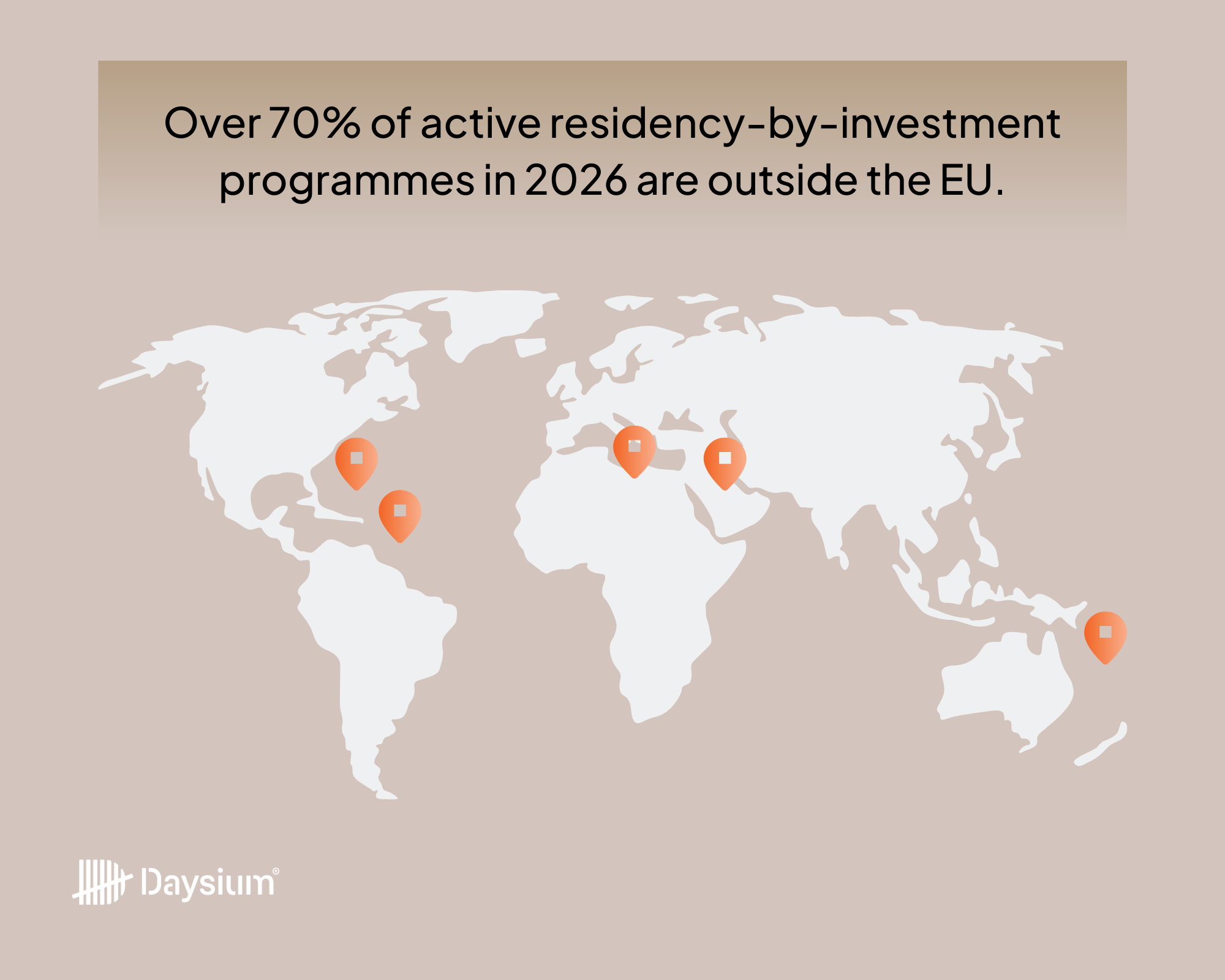
A picture of the world map showing that majority of golden visas in 2026 are outside the EU.

Golden visa programs are still available worldwide, but the tone has changed. Many European countries (particularly EU member states) have ended their programs or, at least, created different, stricter paths to citizenship. At the same time, non-EU countries are attracting HNWIS as global bases for entrepreneurs, investors, and internationally active families with expanding investment in residency programs.

Key changes heading into 2026 include:

  • Spain’s program closed entirely in 2025 after more than a decade of property-based applications.
  • Portugal removed all real estate options, shifting to investment funds, R&D, culture, and innovation.
  • EU pressure on citizenship-by-investment has increased, with several Caribbean schemes facing significant restrictions on visa-free travel.
  • The UAE and Saudi Arabia expanded their long-term residency pathways, making them major alternatives to Europe.
  • Argentina announced it would start offering an investment-to-residency program in 2026. 

In short, golden visas are still here, but the conditions and the most popular destinations have changed. While Europe has almost all but ended many of these schemes, other regions are turning towards these programs to attract investment.

The Role of Day Counting for Investment Visas

Residency-by-investment doesn’t automatically guarantee that you’re a non-tax resident elsewhere. Golden visa holders often have homes, business interests, and family arrangements spread across borders. This increases the risk of:

  • accidental tax residency
  • dual residency conflicts
  • unexpected worldwide tax exposure
  • tax authority enquiries asking for records you don’t have

Many renewal requirements also ask you to prove a minimum presence or at least an ongoing connection.

If you cannot accurately evidence your time in each jurisdiction, you may face:

  • difficulties renewing your visa
  • challenges opening or maintaining bank accounts
  • increased tax scrutiny
  • disputes about where you are truly resident

This is why day counting has moved from a simple administrative task to a core part of residency strategy.

Why Record-Keeping Matters More in 2026

Tax authorities expect individuals to present:

  • exact day counts
  • consistent travel records
  • supporting documentation
  • evidence of ties (property, family, business, spending, routines)

If information is incomplete or inconsistent, you may lose a tax enquiry dispute even if you believed you were compliant. As our case studies show, courts and tribunals have previously questioned whether receipts are sufficient to prove physical presence in a country.

How Daysium Helps

Daysium was explicitly built for internationally mobile individuals who hold (or plan to hold) multiple residencies, including Golden Visa holders.

With Daysium, you can:

  • Automatically count your days across jurisdictions in real time.
  • Keep a defensible evidence trail, including notes, photos, and supporting documentation.
  • Understand your residency exposure before problems arise.
  • Protect yourself during renewals or tax enquiries by maintaining a clear, organised, time-stamped, and geo-located record of your movements.
  • Avoid accidental tax residency by monitoring thresholds and receiving early alerts.

It turns your travel and residency pattern into a clear, structured timeline that protects you from disputes later.

FAQ: Golden Visas

Where are the best golden visas?

The best golden visa depends on your goals, but top choices in 2026 include the UAE, Saudi Arabia, and Portugal’s fund-based route. These offer strong mobility, long-term stability, and clear rules. The right option depends on lifestyle, tax strategy, and how much time you can spend there.

Which countries offer golden visas?

Popular golden visa destinations in 2026 include Portugal (non-property), the UAE, Saudi Arabia, Italy, and several Caribbean nations. Some EU countries have closed or reformed their programs, while non-EU hubs continue to expand their long-term residency offerings.

Are golden visas still a thing in Portugal?

Yes, but the program has changed significantly. Portugal no longer offers real estate routes. Instead, residency is available through investment funds, research, culture, and innovation. The program remains active and respected, but now requires more structured investment and long-term commitment.

What are the benefits of using a golden visa consultancy service?

A reputable consultancy helps streamline the application, avoid errors, and select the most suitable investment route for your goals. They manage documentation, timelines, and compliance requirements, reducing delays. For many investors, this provides peace of mind and ensures the residency process is handled efficiently and correctly.


What’s Next: Planning for a Golden Visa in 2026

Golden visas remain powerful tools for mobility, lifestyle enhancement, and long-term flexibility. But the environment in 2026 is more complex. Programs are evolving, requirements are tighter, and global transparency means tax residency can no longer be an afterthought.

Before choosing a golden visa, it’s essential to understand:

  • where you are currently tax resident
  • whether your travel patterns put you at risk
  • whether you can evidence your movements if challenged

The smartest first step is evaluating your current position.

Start with Your Tax Residence Risk Assessment

If you’re considering a golden visa or you already hold one, understanding your tax residency exposure is crucial.

The Daysium Tax Residence Risk Assessment helps you:

  • Identify how well you understand tax residency rules
  • understand how strong (or fragile) your current evidence is
  • Get personalised recommendations to strengthen your position

Before you invest, relocate or commit to a new jurisdiction, make sure you’re clear on your risk level.

Take your Tax Residence Risk Assessment and start planning with confidence.

Discover how to be tax compliant with Daysium

Created in partnership with industry experts, tackle the complex challenges of day counting and tax record-keeping.